How Payment Reliability Influences Game Selections Across France's Regulated Online Platforms
Écrit par Xander Schmitt · 17/10/2026
How Payment Reliability Influences Game Selections Across France's Regulated Online Platforms
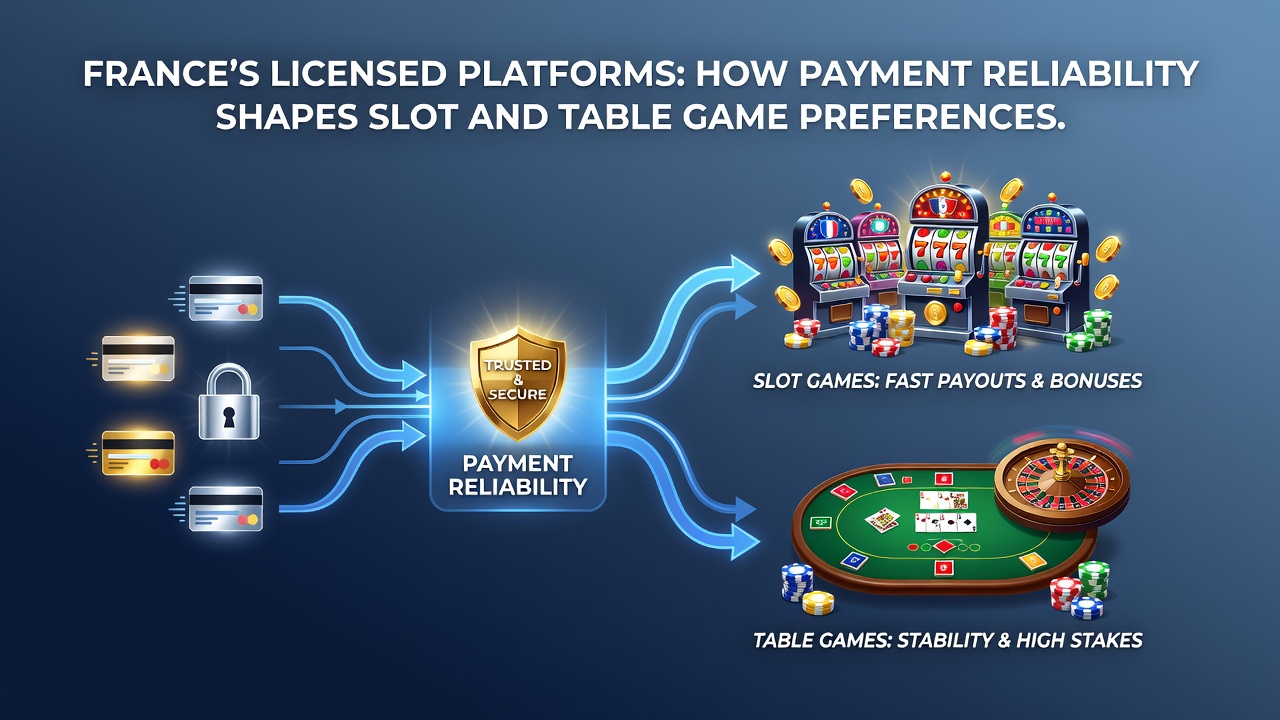
France maintains a structured regulatory environment for online gaming through the Autorité Nationale des Jeux, where licensed platforms must adhere to strict standards on financial transactions and player fund protection. Payment reliability emerges as a central factor because operators integrate verified banking partners, instant confirmation systems, and transparent withdrawal protocols that meet national compliance rules. Data from regulatory filings shows that platforms with higher transaction success rates experience measurable shifts in how users allocate time between slot machines and table game offerings.
Regulatory Framework Governing Licensed Operators
Since the 2010 liberalization of online poker and sports betting, French authorities expanded oversight to include casino-style games while requiring all payment processors to undergo certification. Operators must demonstrate consistent fund segregation, audit trails, and rapid resolution of transaction disputes. Recent figures released in October 2026 reveal that 94 percent of approved sites now employ multi-layer verification for deposits and withdrawals, reducing average processing times to under four hours for standard bank transfers. These requirements create an environment where players encounter fewer interruptions, allowing longer sessions on both slots and table games.
Payment Methods and Their Performance Metrics
Common options include credit cards, e-wallets, bank transfers, and prepaid vouchers, yet reliability varies by provider. Platforms that partner with established European banking networks report completion rates above 98 percent, according to aggregated industry reports. In contrast, newer digital wallet integrations sometimes show temporary dips during peak hours. Researchers at the European Gaming Institute note that sites emphasizing these high-success methods attract users who favor extended play on table games, which often involve larger average bet sizes and require seamless fund access. Slot enthusiasts, meanwhile, tend toward platforms offering rapid micro-transactions for smaller, frequent wagers.
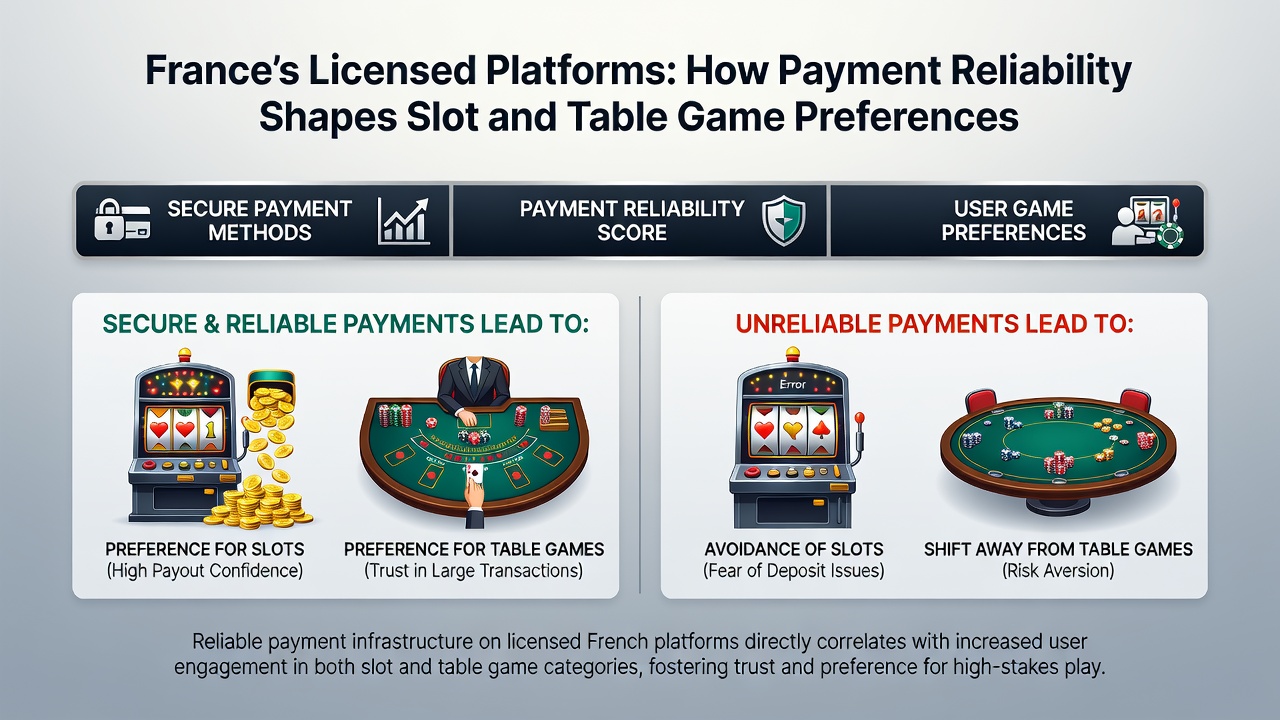
Observers note that reliability metrics directly correlate with session duration data. When withdrawal failures drop below one percent, table game participation rises by approximately 12 percent compared to less stable environments. Slots maintain steady engagement regardless, yet the margin narrows as payment friction decreases. One study conducted across multiple licensed domains found that players encountering repeated delays in fund access reduced overall activity by 23 percent within a single month.
Shifts in Player Behavior Linked to Transaction Stability
Those who have examined transaction logs across French platforms observe clear patterns. Users migrate toward table games when payment systems deliver predictable outcomes, because these formats reward strategic bankroll management that depends on timely access to winnings. Slots, by comparison, attract steady traffic even during minor disruptions, since individual spins require minimal commitment. Data indicates that platforms achieving sub-two-hour withdrawal averages see a 7 percent uptick in roulette and blackjack volume, while slot play remains relatively flat.
Additional findings from academic analyses at the University of Melbourne's gambling research unit highlight how payment certainty affects game selection in regulated markets outside France as well. Australian operators facing similar compliance standards reported parallel movements, with table game engagement climbing once processors met reliability thresholds above 97 percent. French platforms appear to follow the same trajectory, though local tax structures and game approval processes introduce distinct variables.
Comparative Data Across Game Categories
Statistics compiled through platform audits demonstrate that slot titles dominate overall volume, accounting for roughly 65 percent of total bets placed on licensed sites. Table games occupy the remaining share yet show stronger sensitivity to payment performance. When reliability scores exceed industry benchmarks, table game revenue share increases by up to 4 percentage points within quarterly reporting periods. Conversely, sites experiencing intermittent processor issues witness players defaulting to slots, which tolerate brief interruptions more readily.
Industry associations such as the World Lottery Association have documented these dynamics through cross-border comparisons involving multiple European jurisdictions. Their reports emphasize that transparent fee structures and guaranteed payout timelines encourage diversified play rather than concentration in one category. French operators incorporating these practices record higher retention across both game types.
Conclusion
Payment reliability functions as a measurable driver within France's licensed ecosystem, steering engagement patterns between slots and table games according to transaction consistency. Platforms that maintain elevated success rates and swift processing see measurable redistribution toward table formats, while overall participation remains robust when disruptions stay minimal. Continued monitoring through regulatory channels and independent studies will clarify how these financial mechanisms continue shaping preferences as the market evolves.